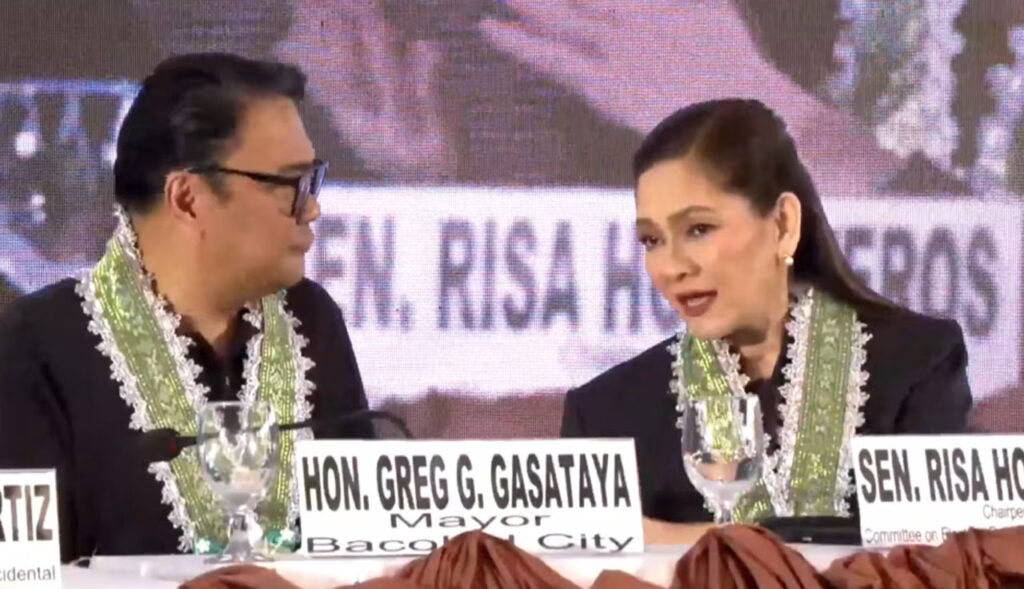

MANILA — The Senate Committee on Electoral Reforms and People’s Participation hosted a consultative meeting at Carlos Hilado Memorial State University in Bacolod City, Negros Occidental, on Friday, which increased support for anti-political dynasty laws that were submitted in the Senate.
The discussion, which was organized by Senate Deputy Majority Leader Risa Hontiveros and included students, civil society organizations, and local government representatives, concluded that an anti-political dynasty law is necessary.
Among those on the panel is Himamaylan, Justin Gatuslao, the vice mayor of Negros Occidental and a self-described member of a “political clan.”
He claimed that the ban on third- or fourth-degree consanguinity relatives inheriting the same office is the most significant of all the suggested restrictions.
“This pattern has been observed for generations—a position is passed down from parent to child, from sibling to spouse, and from cousin to cousin. The true democratic concern is addressed by a ban on succession,” Gatuslao said.
According to Hontiveros, dynasties also include two of the seven writers of the Senate’s six anti-political dynasty bills.
The fourth civil degree of consanguinity and affinity—which includes first cousins, great-great-grandparents, and aunts or uncles-in-law—would be prohibited under Hontiveros’ measure.
Some participants warned that the law needs to be properly prepared to avoid unexpected consequences, even though many Bacolod authorities expressed support.
Certain local leaders argued that voters should ultimately decide who gets elected, regardless of family ties. Others raised concerns about possible loopholes or legal challenges that could arise if the bill’s definition of a political dynasty is too broad or too restrictive.
Meanwhile, youth and advocacy groups welcomed the consultation, saying the measure could open doors for fresh leadership and encourage merit-based politics.
Efforts to pass an anti-political dynasty law have repeatedly stalled in Congress over the years. Political analysts note that resistance often comes from lawmakers who themselves belong to influential political families.
Advocates, however, argue that passing the measure would mark a major reform in Philippine politics, potentially leveling the playing field and improving accountability in governance.
Before compiling comments and drafting a committee report for plenary discussions, the Senate panel is anticipated to conduct more consultations in other areas.