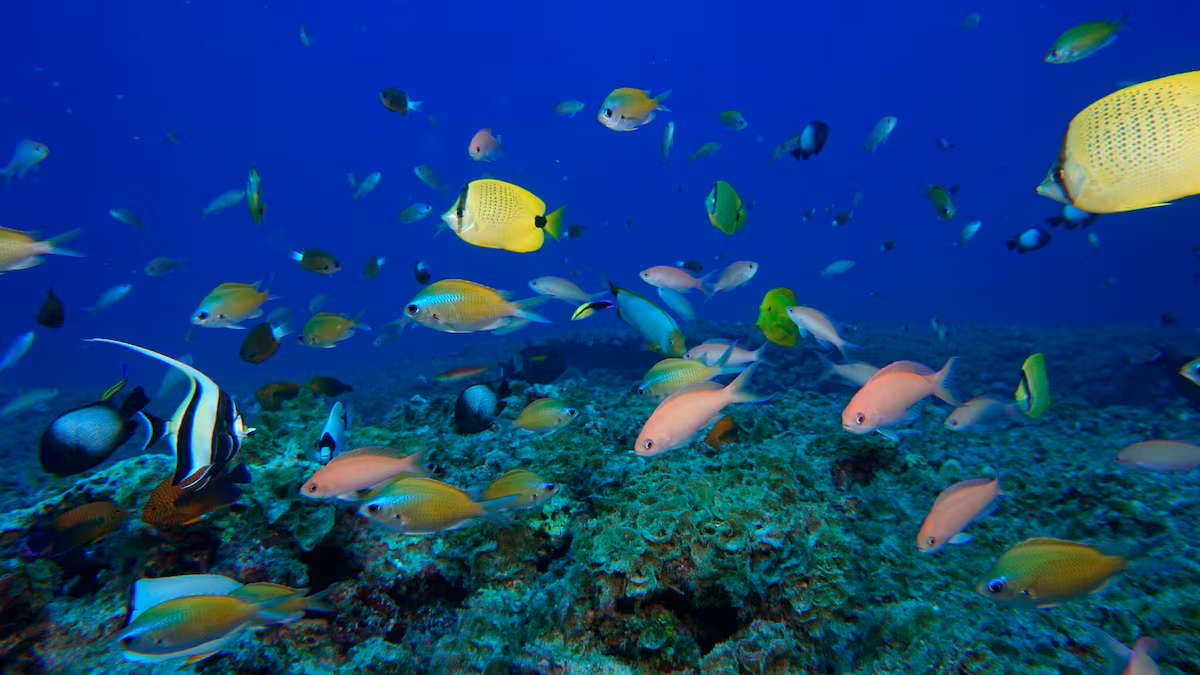
WELLINGTON, New Zealand — According to a study released on Thursday, microplastics were discovered in one-third of the hundreds of fish examined in the coastal waters across several Pacific Island nations.
However, the extent of contamination differed greatly between sites, and the researchers cautioned against “alarmist” interpretations.
“We have to accept that almost everything, whether it’s table salt or beverages, people are finding plastics in all kinds of different sources,” co-author Amanda Ford, a senior lecturer at the University of the South Pacific, stated.
Nearly 900 fish from 138 species, all of which were eaten locally, were collected from the waters off Fiji, Tonga, Tuvalu, and Vanuatu for this research.
In all, under a third had some microplastics, which is lower than the 49 percent global average.
However, only 5% of fish samples from Vanuatu were impacted, compared to over 75% from Fiji’s seas.
The low levels there, according to Ford, were “surprising” and might be the consequence of various garbage disposal methods or ocean currents.
According to the study, Pacific countries may be especially susceptible to microplastic pollution because of their inadequate waste management systems and the fast urbanization of certain islands.
The results, which were published in the PLOS One journal, are particularly pertinent because fish is a major source of food and income for the majority of Pacific people.
According to her, the results are merely “evidence that plastic that ends up in the ocean breaks down into smaller pieces — it can get into food,” she told AFP.
Given the low levels of contamination seen in many of the samples, the health effects of ingesting microplastics are still unclear.
Microplastics have been found in human bodies, including blood, organs, and even brains, according to a number of high-profile studies published in recent years.
Scientists have lately critiqued some of this study, cautioning that the findings might identify plastic from labs or confuse plastic with human tissue.
However, there is no disputing that these largely undetectable plastic fragments are present in every part of the environment, from the bottom of the ocean to the summit of mountains.
The United Nations Environment Program estimates that there are between 75 and 199 million tons of plastic in the ocean.
RELATED VIDEOS: