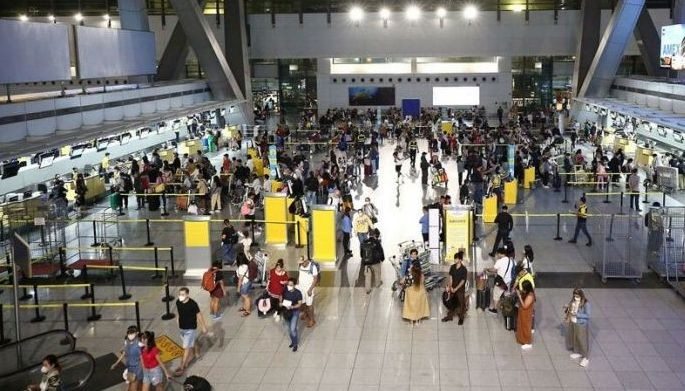
MANILA — Overseas Filipino workers (OFWs) who are separated from their families are among those most impacted when a crisis arises anywhere in the world.
Additionally, as “new heroes,” Philippine law acknowledges the duty to protect their rights and safety, particularly in emergency situations.
The Migrant Workers and Overseas Filipinos Act, also known as Republic Act No. 8042, recognizes OFWs as a group that needs special state protection.
This covers emergency support for personnel affected by the crisis, rescue operations, and legal aid.
REPATRIATION and REINTEGRATION
OFWs are entitled to free repatriation in times of conflict or political upheaval, as the tensions in the Middle East.
The organized return of Filipinos from other nations to the Philippines when they are in danger is known as repatriation.
This include planning a return trip, liaising with the embassy, offering short-term housing, and offering legal and medical support.
They can also enroll in reintegration programs and receive financial aid during emergencies like the COVID-19 outbreak, which caused many OFWs to lose their jobs.
Through livelihood aid, skill development, job facilitation, and psychosocial support, the reintegration programs seek to assist OFWs upon their return.
HOW TO OBTAIN SERVICES?
Affected OFWs should first get in touch with the closest Philippine embassy, which is run by the Department of Foreign Affairs (DFA).
If the situation in the host nation deteriorates, OFWs can register to seek help in an emergency and be included in potential evacuation or repatriation activities.
The Department of Migrant Workers (DMW), which addresses the labor and welfare issues of Filipino workers overseas, is another option available to OFWs.
During the crisis, the organization helps OFWs with labor problems, processing repatriation requests, and liaising with employers and recruitment agencies.
The Overseas Workers Welfare Administration (OWWA) can provide them with cash support and a means of subsistence when they return home.
These include of various reintegration programs, counseling services, short-term housing, and emergency financial assistance.
Inter-agency support teams greet repatriated OFWs upon arrival in the Philippines to facilitate aid processing, transportation back to the province, and enrollment in livelihood programs.
NO LEGAL DOCUMENTS?
The DFA states that people can still apply for an Emergency Travel Document or Temporary Travel Document from the embassy or consulate, which will act as legal identity for their return home, even if their documentation is inadequate.
The safety of Filipinos, regardless of their status overseas, is the government’s first priority, according to the DFA.
WATCH: