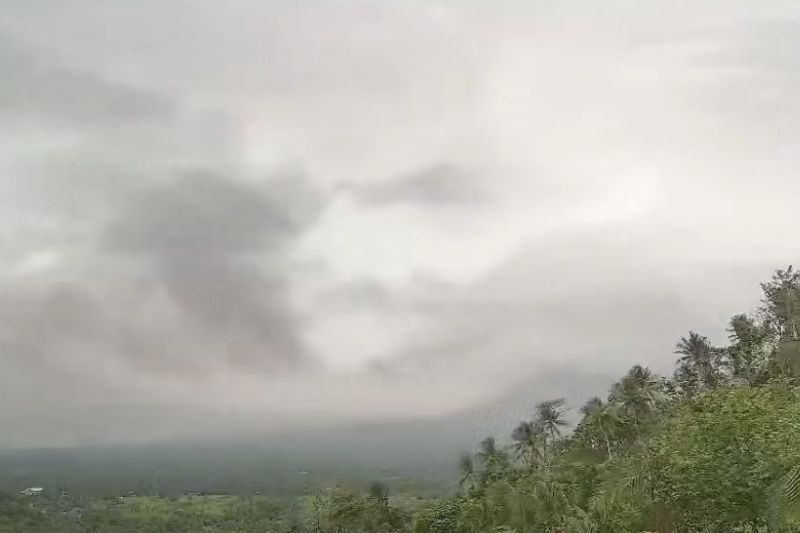
MANILA — According to the Philippine Institute of Volcanology and Seismology (Phivolcs), the Mayon Volcano erupted a plume of brownish ash on Monday morning, extending approximately one kilometer into the sky.
According to Phivolcs, the ash plume moved southwest and dumped ash on a number of barangays in Camalig and Guinobatan, Albay.
On a scale of 1 to 5, it stated that Mayon was still on a level 3 alert, meaning that “magma is near or at the surface, and activity could lead to hazardous eruption in weeks.”
It was still forbidden to enter the 6-kilometer permanent danger zone surrounding the volcano.
“It is not safe to evacuate while ashfall is heavy,” said Camalig Mayor Caloy Baldo.
“Remaining indoors is the safest option,” he said, adding that face masks were being distributed by local authorities.
PHIVOLCS noted that Mayon remains under Alert Level 2, indicating increasing unrest and the possibility of sudden steam-driven or phreatic explosions. Aside from the ash plume, monitoring stations recorded volcanic earthquakes, sulfur dioxide emissions, and continued inflation of the volcano’s edifice.
Residents in nearby communities reported ashfall, particularly in villages located downwind of the volcano. Local government units immediately advised residents to wear face masks and limit outdoor activities, especially those with respiratory conditions.
Authorities reiterated the strict enforcement of the 6-kilometer Permanent Danger Zone (PDZ), warning the public against entering the area due to the risk of pyroclastic density currents, rockfalls, and sudden explosions.
The Albay provincial government said it is closely coordinating with disaster response agencies to monitor the situation. While no evacuations have been ordered following the latest ash emission, officials assured residents that contingency plans are in place should Mayon’s activity escalate.
Mayon Volcano, the country’s most active volcano, has erupted more than 50 times in recorded history and is known for its near-perfect cone shape.