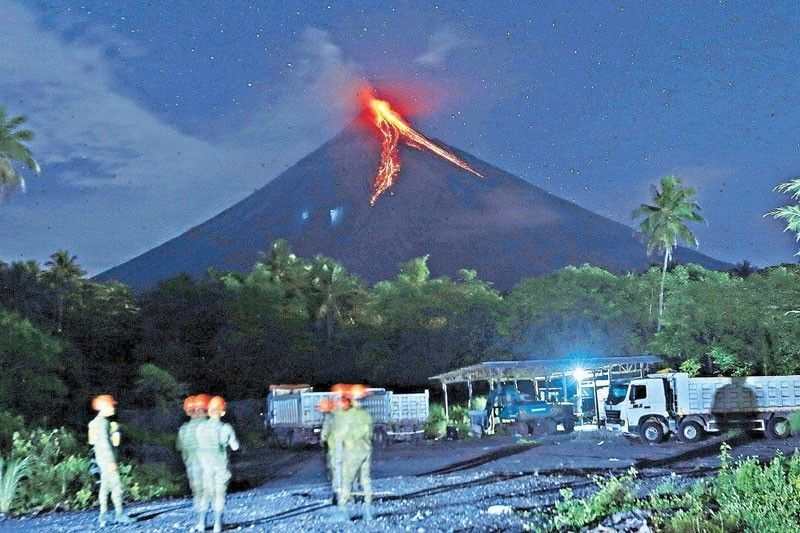
MANILA — The Philippine Institute of Volcanology and Seismology stated on Saturday, January 10, that the Mayon Volcano’s activity might continue for up to six months.
Bacolcol referred to the recent unrest in Mayon as a “quiet eruption,” comparing it to the volcano’s effusive eruption in June 2023, when it continually spewed toxic gases and ash.
About 20,000 people were evacuated from the six-kilometer permanent danger zone (PDZ) at the time.
However, Mayon has not yet discharged a lava flow this year, in contrast to 2023.
The Philippine Institute of Volcanology and Seismology (PHIVOLCS) on Wednesday warned that volcanic unrest at Mayon Volcano could persist for as long as six months, urging local government units and residents to remain on high alert.
According to PHIVOLCS Director Dr. Teresito Bacolcol, the prolonged activity is due to the continued movement of magma beneath the volcano, which could sustain periods of lava effusion, rockfall events, and occasional explosive activity.
PHIVOLCS reported persistent volcanic earthquakes, ground deformation, and sulfur dioxide emissions, indicating that magma remains close to the crater. These conditions increase the risk of pyroclastic density currents, lava flows, ashfall, and volcanic rockfalls, particularly on the slopes facing active lava collapse zones.
Alert Level 3 remains in effect, signifying magmatic unrest and the possibility of hazardous eruptions.
Authorities reiterated the strict enforcement of the 6-kilometer Permanent Danger Zone (PDZ) and extended high-risk zones in specific areas, depending on the volcano’s activity. Thousands of residents from Albay’s most vulnerable barangays continue to stay in evacuation centers, where local governments and national agencies are providing food, medical assistance, and psychosocial support.
Albay Governor and local disaster officials said contingency plans are being regularly updated in case PHIVOLCS raises the alert level.
PHIVOLCS warned the public against entering restricted zones and advised aviation authorities to avoid flying close to the summit due to possible sudden ash emissions.
Residents in nearby towns were also told to prepare for intermittent ashfall and poor air quality, particularly during episodes of increased degassing or weak explosions.
Scientists emphasized that volcanic behavior can change rapidly and urged the public to rely only on official bulletins from PHIVOLCS and local disaster offices.
RELATED VIDEO