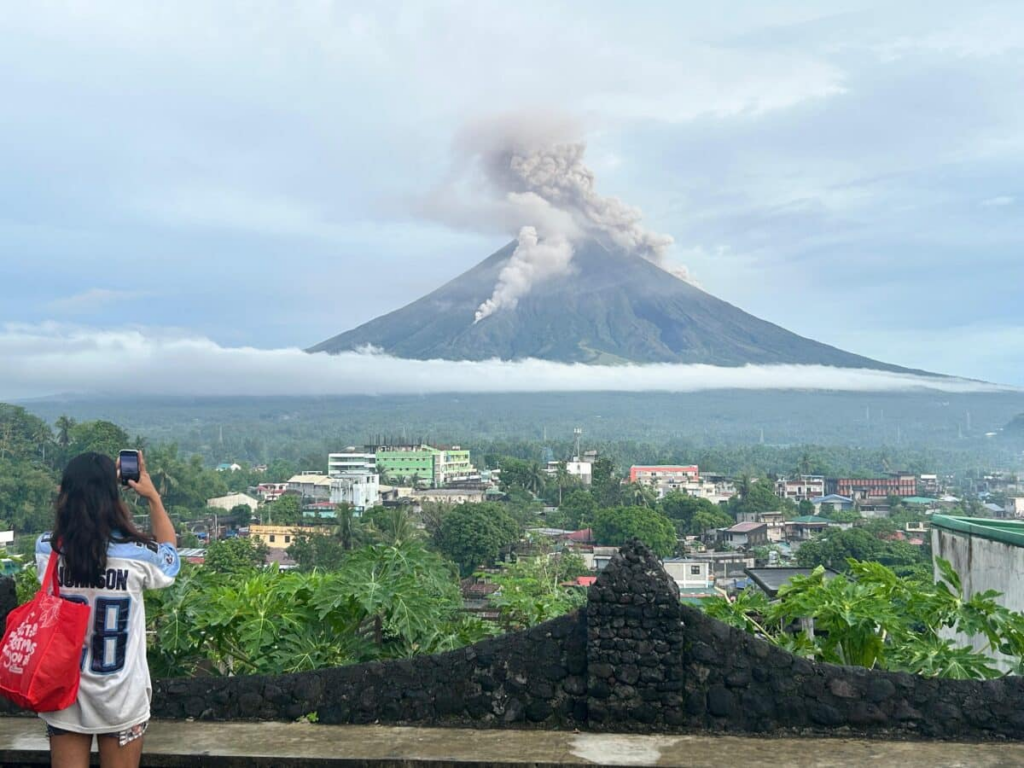
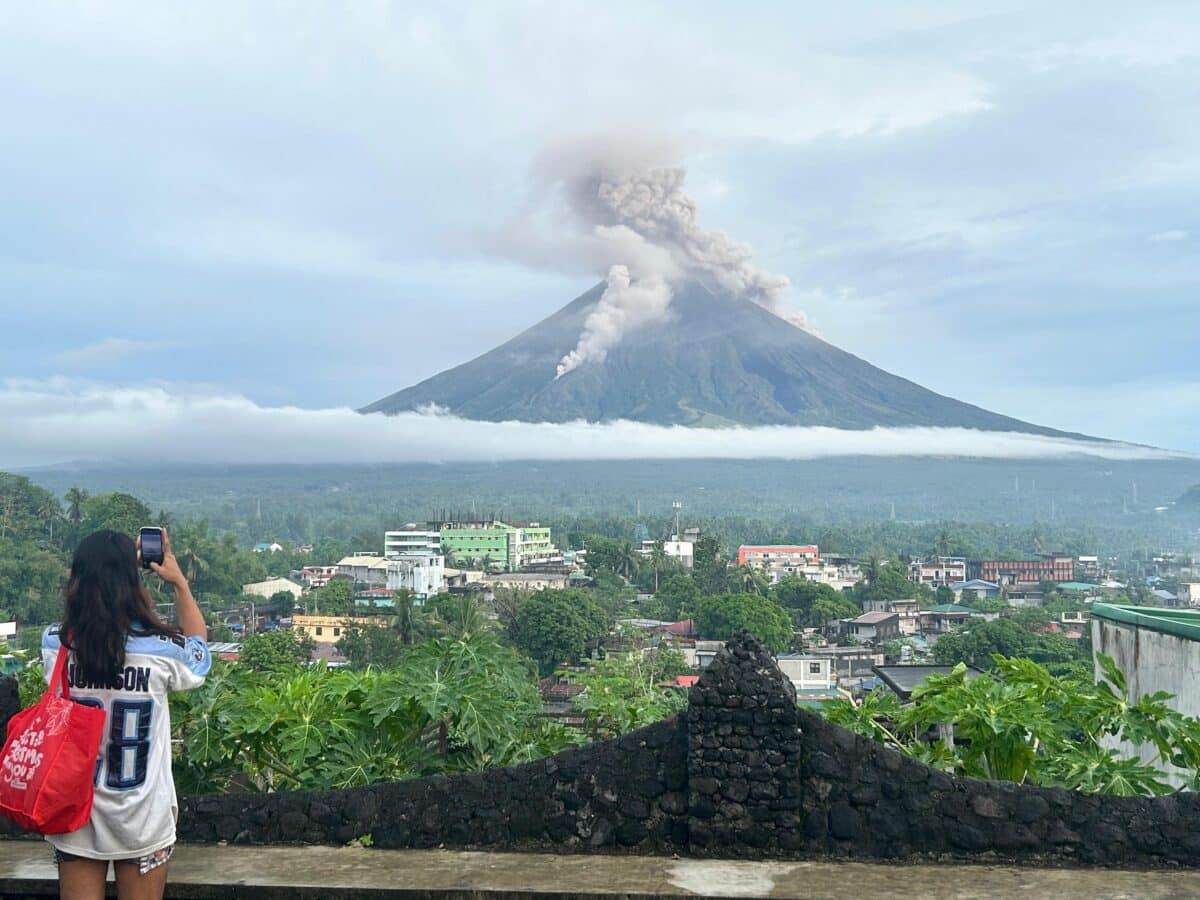
Boulders the size of cars continue to fall from Mayon Volcano’s lava dome, causing the Philippine Institute of Volcanology and Seismology to urge residents to stay away from the area on Thursday.
As of Thursday morning, January 8, Phivolcs had recorded 50 pyroclastic density currents, 162 rockfall events, and one volcanic earthquake, according to Phivolcs chief Dr. Teresito Bacolcol.
“The PDCs and rockfall means there is a constant supply of magma, which leads to lava dome growth at habang lumalaki ang lava dome natin, nagiging unstable. Bumabagsak, nagkakaroon tayo ng rockfall events,” Radio DZMM was informed by Bacolcol.
According to the Phivolcs head, rockfall incidents have been reported in Miisi, Bonga, and Basud Gullies on the volcano’s southern, eastern, and southeast flanks near Daraga, Legaspi, and Sto. Domingo. He said, “Parang kotse ‘yan…Ganun kalalaki ‘yung rockfall.”
He warned that pyroclastic density currents, which can travel at hundreds of kilometers per hour, are particularly hazardous.
According to Bacolcol, Mayon Volcano remains under Alert Level 3 while Phivolcs keeps an eye out for any increases in volcanic quakes, frequent PDCs, sulfur dioxide emissions, lava flow, or lava fountaining.
PHIVOLCS maintained that Mayon’s current alert status remains unchanged, but reiterated that entry into the Permanent Danger Zone (PDZ) is strictly prohibited due to the risk of sudden rockfalls, landslides, and possible phreatic or magmatic explosions.
Residents were also advised to stay alert for official advisories and to avoid river channels and gullies, which could be pathways for debris flows during heavy rainfall.
Ongoing Monitoring
PHIVOLCS said it continues to monitor Mayon using seismic sensors, ground deformation instruments, gas measurements, and visual surveillance, both from observatories and aerial inspections when weather permits.
“We encourage the public to rely only on official information from PHIVOLCS and local disaster offices and to refrain from spreading unverified reports,” the agency added.